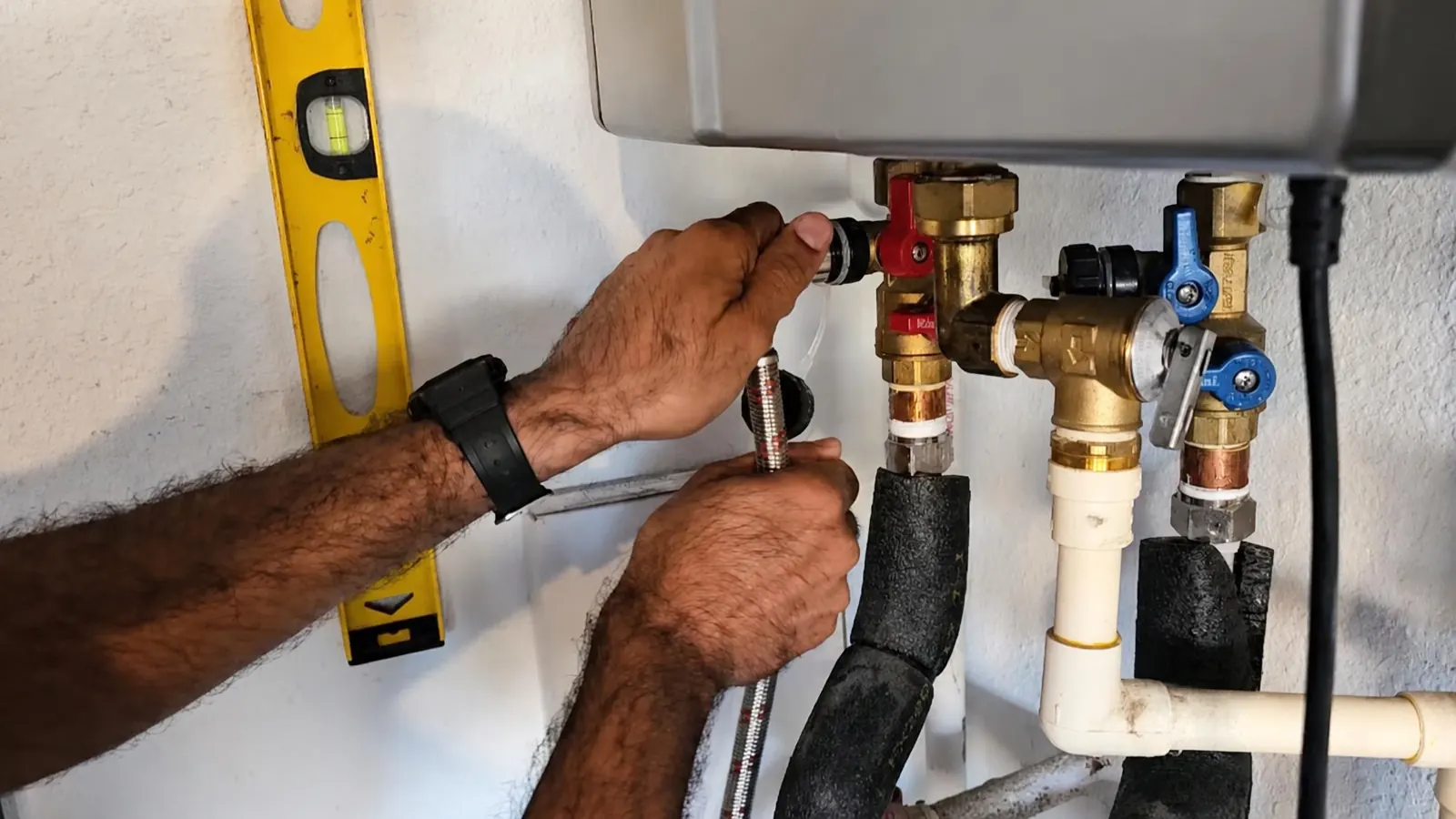
The exhaust vent on a tankless water heater is not a place for improvising. The vent carries combustion gases, including carbon monoxide, out of the home. A wrong material, a loose joint or a blocked termination can send those gases back inside.
This guide explains how tankless venting differs from tank venting, what the common vent types are and what homeowners in San Bruno should check before installing or troubleshooting a unit.
Why tankless venting is different
A tank heater exhausts through a draft hood into a metal flue that rises by buoyancy. Tankless heaters burn more fuel in a smaller space and often use a fan to push exhaust out. That makes the vent run a controlled system, not a chimney.
Condensing models squeeze more heat out of the gas, so the exhaust is cooler and wet. That allows plastic vent pipe, but it also means the vent must slope back toward the unit so condensate can drain.
Common vent types
| Vent type | Typical use | Watch for |
|---|---|---|
| Direct vent (sealed combustion) | Intake and exhaust both piped outside | Both pipes must be sealed and sized per the manual |
| Power vent | Fan pushes exhaust through a vent | Needs power, and the fan can fail |
| Stainless steel vent | Non-condensing units with hot exhaust | Rated joints and clearances to combustibles |
| PVC or CPVC vent | Condensing units with cooler exhaust | Slope toward the unit, support and rated glue |
Termination points and clearances
Where the vent exits the wall or roof matters. Manufacturers specify minimum distances from windows, doors, air intakes, gas meters and property lines. The goal is to keep exhaust out of the house and away from neighbors.
Snow is not a concern in San Bruno, but wind, spider webs and nesting birds can block a termination. A screen rated for the vent, installed correctly, keeps pests out without restricting flow.
Venting problems we see
- Wrong vent material for the model or a mix of brands.
- Insufficient slope, so condensate pools in the pipe.
- Loose or unsupported joints that leak exhaust.
- A termination too close to a window or an air intake.
- A long run with too many elbows, which reduces flow.
Replacing a tank with a tankless unit
Switching from a tank to a tankless heater usually means a new vent path. The old metal flue is too large and not rated for tankless exhaust. We plan the new run through a wall or the roof and check the gas line size at the same time.
If you are weighing an upgrade, see tankless water heater for install, repair and flush service, and water heater installation for the planning side.
Carbon monoxide and detectors
Any gas appliance with a vent problem can release carbon monoxide. Working CO detectors near sleeping areas are a basic safeguard. If a detector alarms, leave the home and call 911. Do not stay to look for the cause.
A vent that has separated or blocked will often show soot or discoloration around the joint. If you see that, shut the unit down and call us.
What we check on a vent inspection
We trace the vent from the unit to the termination, check joints, slope, supports and clearances, and look at the condensate drain. We confirm that the intake, if sealed, is open and clear. A combustion analysis can confirm safe operation on a gas heater.
Venting categories and why the material matters
Tankless heaters fall into two broad groups. Condensing models squeeze extra heat out of the exhaust, so the gas leaves cool and wet. Non-condensing models send out hot exhaust. The difference decides what the vent pipe can be made of.
Condensing units usually vent through plastic such as PVC, CPVC or polypropylene, because the exhaust is cool enough and the condensate would eat metal. Non-condensing units typically need stainless steel rated for hot, corrosive gas. Using the wrong material is a code violation and a safety risk.
Always follow the manual
The installation manual for your exact model lists approved vent materials, maximum lengths, the number of elbows allowed and the clearances to windows, doors and air intakes. Those numbers override any general rule of thumb, including ours.
Common venting mistakes we find
- A horizontal run with no slope, so condensate pools in the pipe.
- Too many elbows or a run longer than the manual allows.
- A termination too close to a window, door or air intake.
- Missing supports, so the pipe sags and the joints stress.
- Mixing vent parts from different manufacturers.
- Reusing an old flue from a tank heater that was never meant for this unit.
Each of these can cause error codes, poor combustion or exhaust entering the house. Carbon monoxide has no smell, which is why working detectors matter in any home with gas appliances.
Questions to ask before the install
Ask where the vent will terminate, how long the run will be and whether the pipe is sealed combustion, which draws air from outside. Ask who pulls the permit and whether the work is inspected. These answers tell you whether the installer has planned the job or is guessing.
Our tankless water heater page covers sizing and gas supply, and water heater installation explains what a permitted install includes. If your current vent looks wrong, call us before you run the unit.
Plumbing problem that cannot wait?
Call the 24/7 line. A dispatcher answers and starts with the first steps.
San Bruno code and gas safety
San Bruno adopts the 2025 California Plumbing Code under section 11.20.010 of its municipal code, including its appendices and the city's amendments. The same section names the building official as the administrative authority, so questions about a specific vent run go to the Building Division.
PG&E's guidance on suspected gas leaks is to leave the area immediately, avoid anything that could spark, call 911 and then call PG&E at 1-800-743-5000. Carbon monoxide alarms are a separate matter, but the response is the same: get outside and call 911. For homes in Daly City or South San Francisco, the rules come from each city, so check with the local building office.
Source type: San Bruno Municipal Code Chapter 11.20 and PG&E gas safety page. Facts are stated according to each agency's own published page.
Questions about this topic
It depends on the model. Condensing units usually use PVC, CPVC or polypropylene. Non-condensing units run hotter and need stainless steel. Always follow the manufacturer's installation manual, because using the wrong material is a safety and warranty problem.
Usually not. The old flue is sized for a hot, buoyant exhaust from a tank heater. Tankless exhaust is different, so most installs need a new vent path.
Blocked terminations, loose joints, a crushed vent section or a condensate drain problem can all trigger a vent error. A bird nest or debris in the termination is a surprisingly common cause.
Manufacturers set minimum clearances from windows, doors and air intakes so exhaust cannot re-enter the home. Check the manual for your model, and ask your local building official about code requirements.