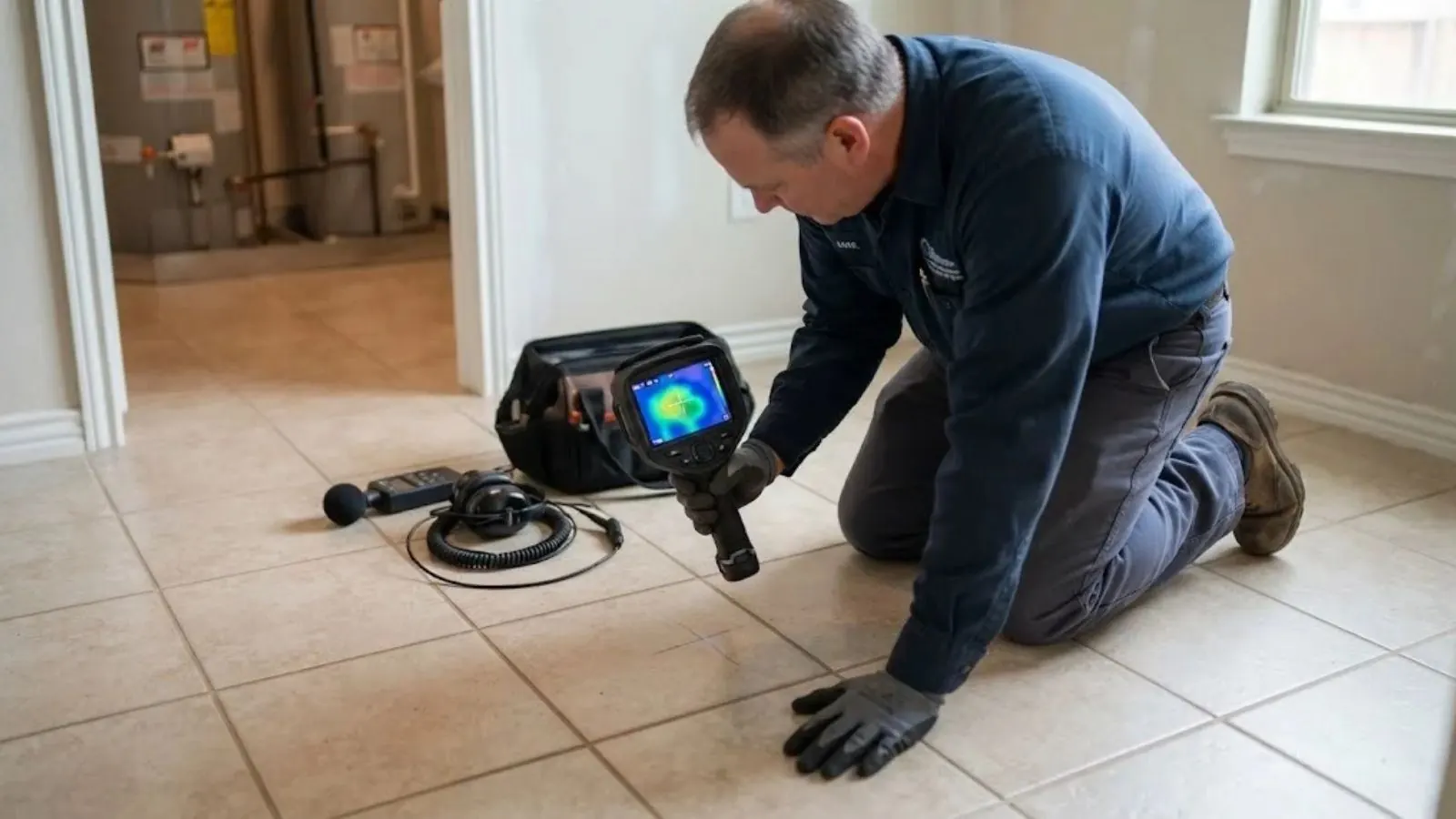
A leak can start with a drip or a flood. If water is coming through a ceiling, running down a wall or soaking carpet, shut off the main valve and call us. We answer 24/7, and a leak that is damaging your home gets a same-day response even at night.
If the damage is slow and hidden, the clues are subtler: a water meter that keeps moving, a bill that climbed, a warm spot on the floor or the sound of running water when nothing is on. Our job is to find the exact spot before any wall is opened.
When a leak is an emergency
Active water in a ceiling, a wall or a floor is an emergency because every hour adds drywall, insulation and flooring damage. A leak near electrical outlets, light fixtures or the panel adds a safety risk. Shut off the water, switch off power to the affected area only if it is safe to do so, and call.
A dripping fixture or a slow stain without growth can wait for a normal appointment. We will help you decide on the phone.
Water meter still running or a high water bill
This is the most common way people discover a hidden leak. The test takes two minutes. Shut off every water-using appliance, then watch the meter's low-flow indicator. If it moves, you have a leak on the house side of the meter. Toilets are the first suspect, then irrigation, then supply lines.
San Bruno's water bill comes from the city, and the city says sewer charges moved to the county property tax bill on July 1, 2024. That means a spike on the city water bill points to water use, not a sewer fee change, and a leak is a strong candidate.
Ceiling, wall and attic leaks
Water travels. A stain on a living room ceiling can come from a bathroom above, a roof flashing or a supply line in the attic. We trace the path with a moisture meter and thermal camera, then confirm the source with a pressure test or a controlled water test.
Stains that appear after rain point toward the roof. Stains that appear when a fixture is used point toward plumbing. Stains that never change suggest a slow supply leak. Knowing which saves cutting the wrong wall.
Under-house and crawlspace leaks
Many San Bruno homes have raised foundations with a crawlspace under the floor. Leaks there can go unnoticed for months. Signs include sagging insulation, musty smells, damp soil and a floor that feels spongy near the bath or kitchen.
We inspect with a light and a moisture meter, check supply lines and drains and photograph what we find. If the leak is in a drain, drain cleaning and camera work may follow. If it is a supply line, a repair is usually quick once the pipe is found.
| Symptom | Likely cause | How we find it |
|---|---|---|
| Meter moves with everything off | Toilet, irrigation, supply line or buried service line | Isolate sections, then use acoustic listening |
| Warm spot on a floor | Hot water line leaking under a slab | Thermal camera and acoustic correlation |
| Stain on a ceiling | Supply or drain line above, or a roof leak | Moisture meter and thermal imaging |
| Musty smell and damp soil under the house | Supply or drain leak in the crawlspace | Visual inspection and moisture mapping |
| Wet patch in the yard with no rain | Buried water service or irrigation line | Ground microphone and pressure test |
Think you have a leak?
Call now. We will tell you on the phone whether it is an emergency or a quick appointment.
Buried and yard line leaks, irrigation and meter box leaks
The water service line runs from the meter at the curb to the house. A leak in that line wastes water without any sign indoors. We use ground microphones and correlators that hear escaping water through soil, and a pressure test confirms the finding.
Irrigation lines and meter box fittings leak too. A soggy patch of lawn or a meter box full of water is the sign. Repairing a leaking fitting at the meter box is quick. If the leak is at the city side of the meter, we will tell you to contact the city water division. Its main line is (650) 616-7162.
If you also have a pool or spa, ask us about a pressure test of its lines. We treat those as a smaller add-on, not the focus of this service.
Commercial leak detection
Businesses sometimes call for leak detection because a bill is high or a tenant space is wet. We look for the same signs, but commercial buildings have more zones and often more than one meter. Many calls end up being a toilet or a flushometer valve, and we will say so plainly instead of billing for work you do not need.
What affects leak detection cost
The visit is priced for time, equipment and access. The repair is separate and quoted once the leak is found.
- Size and layout of the propertyA small home with accessible plumbing takes less time than a large building with several zones.
- Where the leak is suspectedSlab leaks, buried lines and ceiling leaks each call for different equipment.
- Access to pipesCrawlspaces and open basements are quick to inspect. Finished walls require more careful work.
- Number of testsA single pressure test costs less than isolating several zones.
- Repair after detectionFinding the leak is one price and fixing it is another. You decide after seeing the findings.
Water damage from a sudden leak may be covered by insurance, while slow leaks and long-term wear often are not. Want your real number? Call (650) 860-1670.
If the leak is under a concrete floor, our slab leak repair page covers repair options. If the leaking pipe has burst, see burst pipe repair. Customers in Millbrae and other nearby towns get the same service.
Meter questions and calling 811
According to the City of San Bruno Water Division, questions about the meter and the street side of the service line belong to the city. Its number is (650) 616-7162.
A meter test helps separate a leak in the house from one in the city's pipe. If any digging is needed outside, call 811 first so utilities can mark their lines.
Frequently asked questions
Yes. If water is coming through a ceiling, soaking a floor or running out of a wall, call the 24/7 line. We start with stopping the water, then trace the source. A slow hidden leak can usually wait for a daytime visit, and we will tell you which one yours is.
Turn off every fixture and appliance that uses water, then look at the water meter. Most meters have a small dial or triangle that spins when water moves. If it keeps turning, water is leaving the system somewhere. Check toilets first by adding a few drops of food coloring to the tank.
Start with the meter test above. If the meter moves with everything off, the leak is on your side of the meter and we can find it. For billing questions, San Bruno's Utility Billing office handles water bill questions at 650-616-7086, according to the city's website.
Usually not many. We use acoustic listening devices, moisture meters and thermal imaging to pinpoint the leak first. That lets us open a small patch exactly where the water is, instead of guessing.
Yes. Acoustic correlators and ground microphones track the sound of water escaping from a pressurized line, and a tracer gas can be used when sound is weak. We will explain what is likely on your property before we begin.