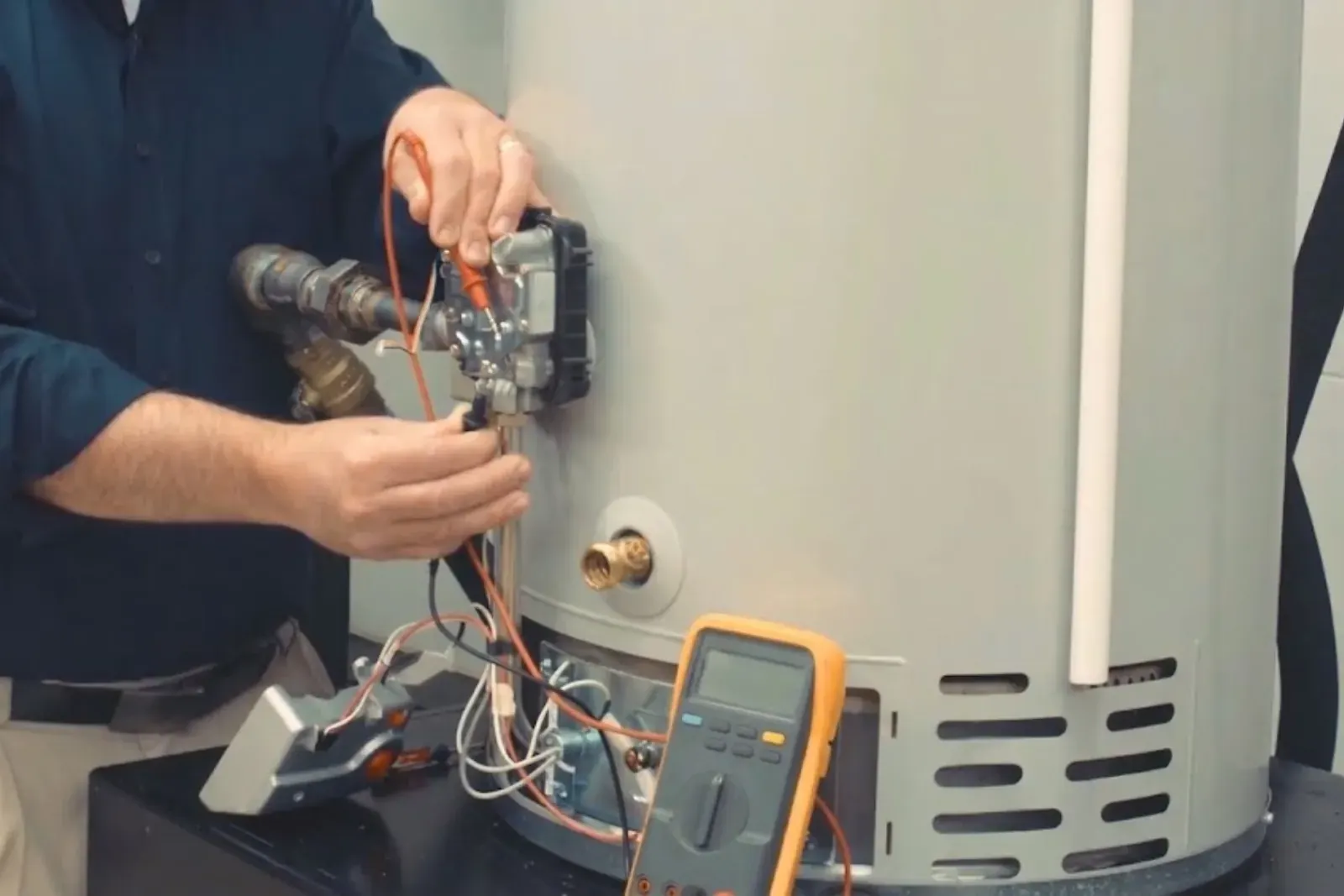
Inside most tank water heaters hangs a rod that few homeowners ever see. It is called the anode rod, and it is the reason many tanks last as long as they do. When the rod wears out, the steel tank is next. Replacing it is one of the cheapest ways to extend a heater's life, when it is done in time.
This guide explains what the rod does, how to know when it is spent and what replacement involves.
How an anode rod protects the tank
A water heater tank is steel with a glass lining. Tiny flaws in the lining expose steel to water, and corrosion begins. The anode rod is made of a metal that corrodes more easily than steel, so it gives up electrons first and sacrifices itself.
As long as the rod has material left, the tank is protected. When the rod is eaten down to its core wire, nothing stands between the water and the steel.
Types of anode rods
| Rod type | Strengths | Trade-offs |
|---|---|---|
| Magnesium | Strong protection, common in standard tanks | Wears faster in some waters and can add odor in certain water chemistries |
| Aluminum | Lasts longer in some conditions | Not suited for every household and can add aluminum byproducts |
| Aluminum and zinc | Helps with sulfur odor | Different wear profile |
| Powered anode | Does not wear out the same way | Needs electricity and costs more |
Signs the rod is spent
- Rotten egg or sulfur smell from hot water.
- Rusty or discolored hot water.
- Popping or rumbling noises from sediment.
- A heater more than a few years old that has never been inspected.
- A rod, when pulled, that is thin, pitted or mostly bare wire.
Some of these symptoms have other causes, so the rod should be checked, not guessed at.
How we replace an anode rod
- Shut down the heaterTurn off power or gas and close the cold water valve.
- Relieve pressure and drain a few gallonsOpen a hot tap and drain enough water to drop the level below the rod port.
- Remove the old rodLoosen the hex head with a breaker bar. Stuck rods need steady force and sometimes a helper.
- Install the new rodWrap the threads with sealant tape, fit the new rod, tighten it and refill the tank.
Replace the rod, or the heater
If the tank is under about eight years old and does not leak, a new rod is a good investment. If it is older and the rod is long gone, the tank may already be rusting inside. Replacing the rod then adds little.
We tell you which situation you are in. For heaters at the end of their life, see water heater replacement. For help with other failures, see water heater repair.
Flushing and rods go together
While the tank is drained for a rod swap, flushing the sediment out of the bottom is easy. Scale and sludge on the tank floor insulate the water from the burner and stress the steel. Cleaning them out improves efficiency and reduces noise.
If your water is hard, the flush is as valuable as the rod. A softener can reduce the scale at its source.
Common mistakes
- Forcing a stuck rod and damaging the tank threads.
- Using the wrong rod for your water, which can cause odor.
- Skipping the pressure relief step and getting sprayed.
- Leaving out thread sealant.
- Replacing the rod in a tank that is already leaking.
When to call us
Call if the rod will not budge, if you have no overhead clearance or if your tank has odor and rust. We also check the relief valve, the straps and the drain pipe during the same visit, so the heater is in good shape afterward.
Choosing a rod type
Anode rods are made of magnesium, aluminum or an aluminum and zinc blend. Magnesium protects best and is the usual factory choice. Aluminum lasts longer in some water and does not cause the same smell issues. Powered rods use a small electric current and need no replacement, but they cost more.
If your hot water smells like rotten eggs, bacteria in the tank may be feeding on the magnesium. Swapping to an aluminum or powered rod can help, and so can a tank flush. A plumber can check which applies.
Signs and timing
- The rod is thin, pitted or reduced to a bare wire.
- The tank is more than three or four years old and the rod has never been checked.
- Hot water shows rust or has a metallic taste.
- The tank has been flushed and the sediment contained bits of rod coating.
- You have hard water, which wears rods faster.
Many tanks are installed in tight closets, so there is not enough room above to pull a rigid rod. A flexible, segmented rod bends so it can be fed into the tank. We carry both kinds.
Replacing a rod does not repair a tank that has already started to corrode through. It slows future damage. If the tank is old and rusted at the base, replacement is the better use of money.
The same advice holds for neighbors in South San Francisco and Pacifica, whose water chemistry differs from San Bruno's.
Plumbing problem that cannot wait?
Call the 24/7 line. A dispatcher answers and starts with the first steps.
San Bruno water chemistry
The City of San Bruno's 2023 Water Quality Report lists local groundwater at a pH of 7.27, with a range of 6.86 to 7.55, and an average hardness of 215.6 ppm as calcium carbonate. The report lists San Francisco Regional Water System water at an average pH of 9.2, with a range of 8.4 to 9.8, and an average hardness of 46 ppm.
Those two sources are very different, and the mix at a given tap depends on location. The report says groundwater made up 29 percent of the 2023 supply. The report does not say how long a rod lasts in either water, so the only way to know your rod is to look at it. The same mix of source waters affects homes in Millbrae, though Millbrae reports using only the regional system.
Source type: City of San Bruno 2023 Water Quality Report and BAWSCA member profile. Facts are stated according to each agency's own published page.
Questions about this topic
It is a metal rod, usually magnesium or aluminum, that hangs inside the tank. Corrosive elements in the water attack the rod instead of the steel tank, so the rod is sacrificed to protect the tank. Once the rod is consumed, the tank starts to rust.
There is no single schedule. Many plumbers check it every few years, and the rate depends on water chemistry and heater use. A rod that is mostly bare steel wire needs replacing.
It is possible, but the rod is often stuck, and you need clearance above the tank to pull it out. A long breaker bar and a flexible rod can help. A tank with a stuck rod can be damaged by forcing it.
No. A leaking tank has already rusted through. A new rod protects a sound tank. It cannot repair a failed one.
Water chemistry affects rod life, and San Bruno's mix of well and regional water varies. The city reports hardness and pH for both sources, but it does not give a rod life. We inspect rods in person.