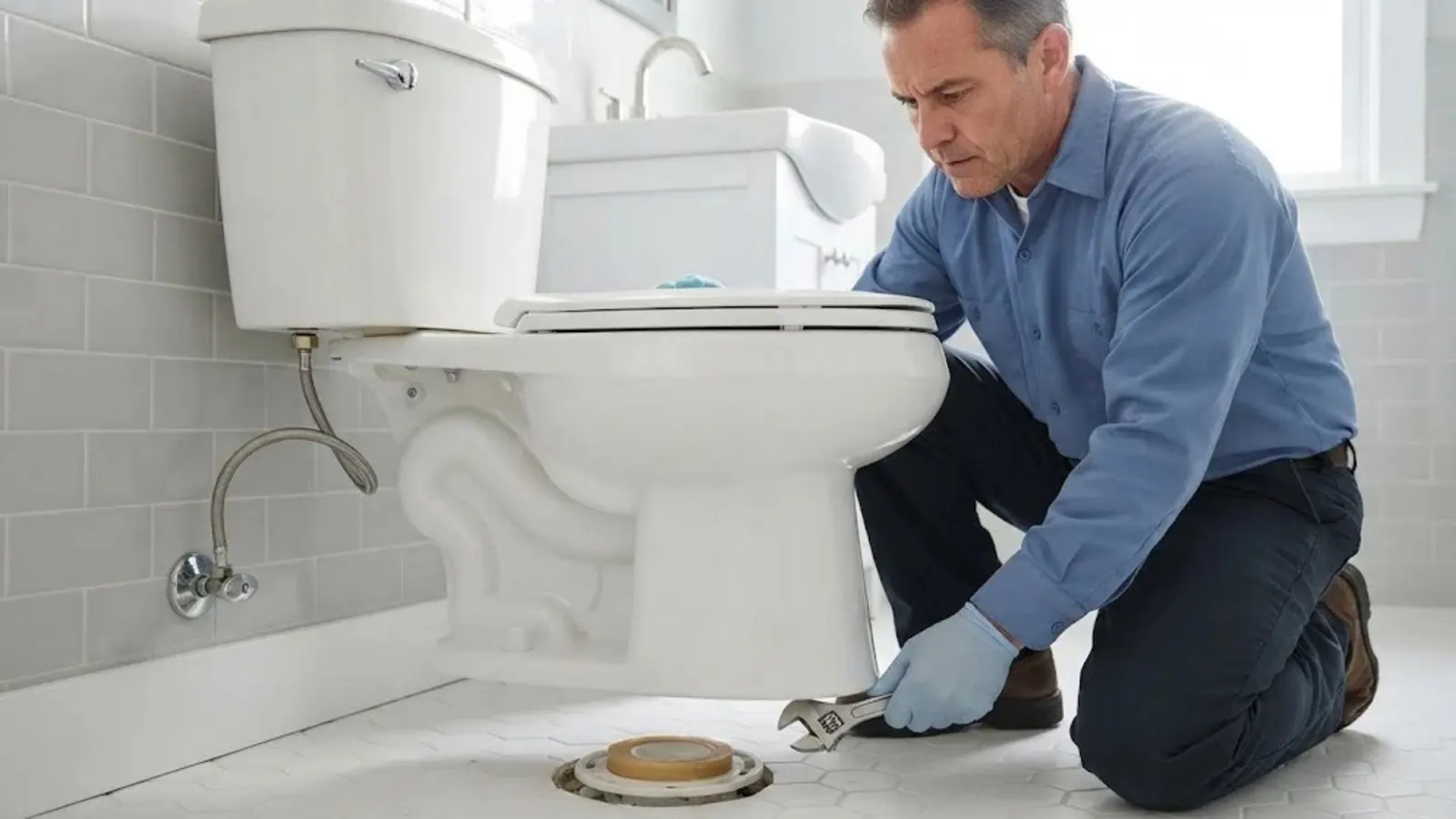
Vinegar and baking soda is a popular home remedy for a clogged toilet because it is cheap and uses things most kitchens have. It can help with a mild clog. It will not fix every one, and it can waste an hour when the problem is deeper in the drain.
This guide explains what the mixture does, how to try it safely and when to stop and call a plumber.
What vinegar and baking soda actually do
Baking soda is a base and vinegar is a weak acid. Together they fizz, producing carbon dioxide and water. The bubbles can loosen soft buildup around a partial clog and help water pass. They do not dissolve paper pulp in quantity, grease hardened in a pipe or objects such as toys.
That means the mixture works best on slow, partial clogs. A toilet that is full to the rim and not moving at all needs a plunger or an auger.
A safe way to try it
- Stop flushingIf the bowl is nearly full, do not flush again. Remove excess water with a cup if it threatens to overflow.
- Pour baking sodaAdd about a cup of baking soda into the bowl.
- Add vinegar slowlyPour in about two cups of white vinegar and let it fizz.
- Wait, then flushGive it 20 to 30 minutes. Then pour hot, not boiling, water and flush once.
What to do if it does not work
Use a flange plunger, which has a rubber extension that seals the toilet outlet. Push gently first to compress the air, then pull back and repeat. Many clogs give way after a few strokes.
A toilet auger, sometimes called a closet auger, reaches the trap without scratching the porcelain. If both fail, the blockage may be past the toilet, and that is a job for a cable machine. See toilet repair for how we handle it.
Signs the problem is not the toilet
- The tub or shower gurgles or backs up when the toilet is flushed.
- More than one toilet is slow.
- A floor drain bubbles.
- There is a sewage smell in the lowest part of the house.
- The washing machine drain makes the toilet bubble.
Those signs point to the main drain or sewer lateral. If you see them, stop all water use and call.
What not to do
Do not pour chemical drain openers into a toilet. They can sit in a standing clog, damage the wax ring or burn skin during plunging. Do not use boiling water on a porcelain bowl. Do not keep flushing hoping the clog will pass, since a full bowl may overflow.
Keep wipes, paper towels and cotton out of the toilet, even those labeled flushable. They do not break down like toilet paper and are a frequent cause of clogs and sewer backups.
Frequent clogs deserve a closer look
If a toilet clogs every week, the problem is probably not what is going into it. A partial blockage downstream, a worn flush mechanism, a rough-cast trap or a vent problem can all cause it. A camera run through the drain line often finds the cause. For that work, see drain cleaning.
Older toilets with weak flushes may simply be the wrong tool for the job. Replacing one with a modern efficient model often ends the cycle.
A quick note on safety
Wear gloves when working with a clogged toilet and wash your hands afterward. Keep children and pets away. If sewage is on the floor, ventilate the room and clean with a disinfectant. If the backup is large, call a professional.
What actually happens in the bowl
Vinegar is a weak acid and baking soda is a weak base. Together they produce carbon dioxide gas, water and a salt. The foam looks dramatic, but it has very little force and it does not dissolve toilet paper or wipes. The bubbles rise away from the clog rather than pushing through it.
Because the mixture neutralizes itself within a minute or two, it leaves mostly warm, slightly salty water behind. That is harmless to pipes, but it is not the powerful treatment it is sometimes described as.
Better first steps for a stopped toilet
- Stop the flushDo not flush again. Lift the tank lid and push the flapper down if the bowl is near the rim.
- Use a flange plungerA flange plunger seals the drain opening. A flat sink plunger does not. Push gently first to push out air, then pump steadily.
- Add hot tap water and dish soapPour a squirt of dish soap into the bowl and add hot water from the tap. Boiling water can crack porcelain, so avoid it.
- Try a closet augerA toilet auger reaches past the trap without scratching the bowl. Crank slowly, and stop if it jams.
If these steps do not work, the blockage is deeper than the trap or the line is partly blocked. At that point, a camera and a cable are the right tools. See drain cleaning and toilet repair.
What not to combine
Never pour a chemical drain opener into a toilet and then plunge or add vinegar. Splashing caustic liquid is dangerous, and mixing products can release harmful fumes. If you have used a chemical product, tell the plumber, so they can protect themselves.
Plumbing problem that cannot wait?
Call the 24/7 line. A dispatcher answers and starts with the first steps.
San Bruno sewers, billing and who to call
San Bruno's sewer system is run by the city's Public Works, Wastewater division, which also administers the point-of-sale lateral requirement under Municipal Code Chapter 10.13. If a toilet clog turns out to be a lateral problem, that office is the place for questions about the city's side of the system.
The city's Utility Billing page says sewer charges moved to the San Mateo County property tax bill on July 1, 2024, and that water charges are still collected through the San Bruno utility bill. Water bill questions go to Utility Billing at 650-616-7086. For toilet repairs in Millbrae or Pacifica, the process is the same, but each city has its own utility.
Source type: City of San Bruno Public Works Wastewater and Utility Billing web pages. Facts are stated according to each agency's own published page.
Questions about this topic
Sometimes, for a mild clog made of paper or soft waste. The fizz does not dissolve a solid blockage or a toy, and it does nothing for a blockage deeper in the drain line. Use it as a gentle first step, then switch to a plunger.
No. Never mix vinegar with chemical drain cleaners or bleach. The reactions can release harmful gases. Use one product at a time and ventilate the room.
Many people wait 20 to 30 minutes, then flush with hot water poured from waist height, but not boiling. Boiling water can crack porcelain.
That points to a blockage in the main drain line, not the toilet. Stop using water and call a plumber.